Indoor Cat Enrichment: DIY Toys and Easy Play Ideas
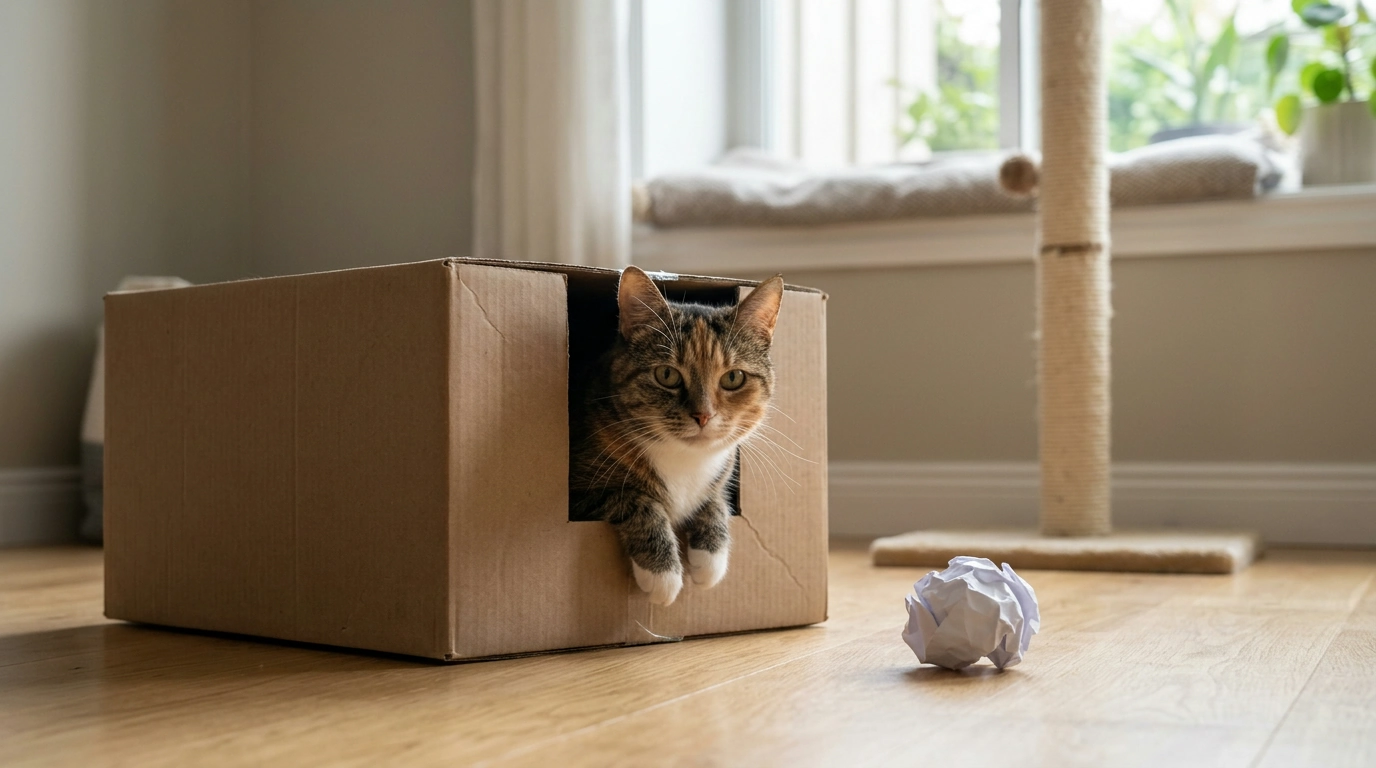
You bring home a new cat toy, and your cat walks right past it to climb into the box. That familiar moment is a useful reminder: making an indoor cat’s day more interesting doesn’t require a shopping spree or a home makeover. A few safe opportunities to play, explore, scratch, watch, and rest can go a long way. Start with one idea, notice what your cat enjoys, and save the others for another day.
Start with the activities your cat already loves
Cat enrichment means giving your cat ways to express natural behaviors in a safe indoor setting. Chasing a moving toy, climbing to a favorite lookout, hiding in a cozy space, scratching a sturdy surface, and watching activity outside a window all count.
Before you set up anything new, watch how your cat spends a typical day. Do they dash after a tossed toy, work patiently to find food, seek out high places, or prefer a quiet hideaway? Let that answer guide your first choice. A senior cat and a young, energetic cat may enjoy very different activities—and no cat needs to love every idea.
For more background on creating a cat-friendly indoor environment, explore The Ohio State University Indoor Pet Initiative’s cat resources.
Easy DIY cat enrichment ideas to try today
Try turning a plain cardboard box into a hideout. Remove staples and loose tape, then set the box on a stable surface with a wide, unobstructed entrance. Leave it open so your cat can come and go freely. You can also toss a crumpled paper ball across a clear floor for a short chase game; put it away if your cat starts chewing off pieces.
For a food activity, place a few pieces of your cat’s regular food in easy-to-find spots around one room. Once your cat understands the game, you can vary the locations without making the search frustrating. A cardboard tube can also become a supervised treat puzzle: fold one end, add a few pieces of food, and leave the other end open enough for your cat to work them out. Use food from your cat’s usual daily allowance rather than adding unlimited treats.
| If your cat likes… | Try this | Keep in mind |
|---|---|---|
| Chasing | Toss a crumpled paper ball across a clear floor | Remove it if your cat starts chewing or swallowing pieces |
| Searching | Hide a few pieces of their regular food | Begin with easy-to-find spots |
| Hiding | Set out an open cardboard box | Make sure your cat can enter and leave freely |
| Watching | Make a comfortable window-side perch | Secure the perch and keep windows safely closed or screened |
Supervise homemade toys and remove anything your cat begins to tear apart or swallow. Avoid strings and small detachable pieces, and put interactive toys away when playtime ends. If your cat is on a prescribed diet or has feeding restrictions, ask your veterinarian before using food games.
Build a play routine that fits a busy day
You don’t need to schedule an elaborate activity hour. One workable routine is a brief wand-toy session in the morning, a small food search later in the day, and another short play session in the evening. If that’s too much for your schedule or your cat’s interest, begin with just one session.
Move a wand toy like something your cat might want to stalk: pause, let it dart away, and give your cat chances to chase and catch it. Constantly holding a toy out of reach can make the game less satisfying. Rotate a few toys instead of leaving every option out at once, and end the session when your cat walks away or stops engaging.
Match the pace to your cat’s comfort. Gentle movement or a food search may suit a less active cat better than fast leaps. A sudden change in activity, appetite, or behavior is worth discussing with your veterinarian. The ASPCA’s general cat care guidance is another helpful resource for everyday care questions.
Make your home more interesting without making it crowded
Thoughtful placement can do more than a roomful of gear. A stable, accessible perch offers a view from above; a sturdy scratching option gives your cat an appropriate place to stretch and scratch. Add a cozy hideaway and a quiet resting spot, and your cat has several ways to choose how to spend the day.
Where practical, separate key resources so your cat has comfortable choices for eating, drinking, resting, and using the litter box. Keep routes to those spaces easy to navigate, especially for a cat who is older or less mobile. A safely secured window view can add interest, and even moving a familiar box to a different spot can make it feel new.
Keep a small menu of ideas close at hand
When you want DIY toy ideas, play-routine suggestions, and cat-friendly home tips together, our printable Enrichment Ideas for Indoor Cats guide is an option to keep handy. Our team likes having a few activities to choose from rather than trying to introduce everything at once.
If you’re also welcoming a dog, our New Puppy Training Starter Guide covers puppy routines; keep your cat’s hiding and resting spaces separate and accessible as your household adjusts.
FAQ
What are some easy DIY ideas for cat enrichment?
Try a supervised cardboard-box hideout, a paper-ball chase, a simple cardboard-tube food puzzle, or a few pieces of regular food hidden in easy-to-find places. Remove any toy with loose or chewable parts.
How often should I change my indoor cat’s activities?
Offer regular opportunities to play and explore, then rotate a small selection of toys or activities as interest fades. Follow your cat’s response rather than a rigid schedule.







Leave a comment