Make Storytime a Place for Growing Minds
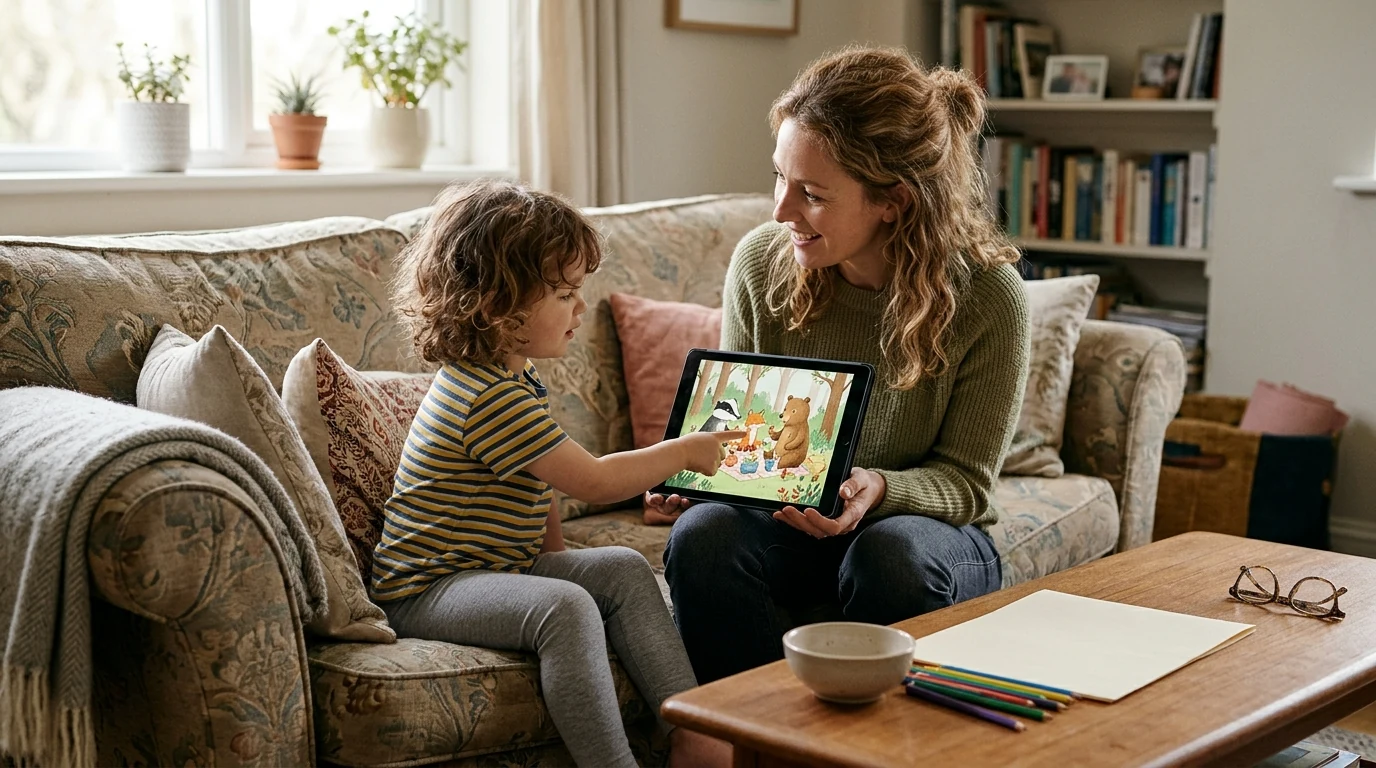
A good story gives children more than a quiet moment. It invites them to imagine what might happen next, notice how someone feels, and talk through a choice. Our Educational Storybook for Growing Minds brings imaginative stories with lessons together in a downloadable PDF. Whether you read aloud or share the reading, the most valuable part may be the conversation that follows. For more guidance, see Benefits of Motion in Animated Storybooks for Children’s ….
Let the story lead the lesson
Start with the story, not an explanation of what your child is supposed to learn. Give them time to meet the characters and enjoy what happens. If you stop at a natural turning point, one open question is enough: “What do you think might happen next?” You do not need to steer them toward a correct answer. For further reading, see Affordances and limitations of electronic storybooks for ….
Afterward, you might ask which choice a character made or how the character may have felt. If your child wants to talk about a funny detail instead, follow that thought. It can become a path into a deeper conversation—or simply make reading together enjoyable.
| Storytime moment | Try asking | What it encourages |
|---|---|---|
| Before reading | “What do you notice about the title?” | Curiosity and predictions |
| During reading | “What could the character try now?” | Imagination and problem-solving |
| After reading | “Would you have made the same choice?” | Reflection and conversation |
These questions are invitations, not a checklist. Some days your child may have plenty to say; other days, they may just want you to keep reading. Both can be good storytimes. The American Academy of Pediatrics’ early literacy resources also emphasize the value of reading and sharing books with young children.
Build a reading routine that fits your day
Choose a time you can enjoy rather than a time you feel obliged to fill. A few calm minutes after breakfast may work better for your household than a long bedtime session. On a busy day, you can read part of a story and return to it later. There is no need to finish a set number of pages for the time to count.
Because our storybook is a PDF, you can read it together on a device that suits your household. You might read aloud while your child listens, trade turns if they are ready to read, or let them follow along while you read. Consider what feels comfortable for their attention and your family’s approach to screen time; shared reading does not have to look the same every day.
Revisiting a favorite story is worthwhile, too. On a second reading, a child may notice a detail they missed or describe a character’s decision differently. You can let the conversation continue away from the device with a drawing, a pretend-play scene, or a quick chat during another part of the day. None of those needs to become a formal activity.
Choose stories for the child in front of you
When you are looking for stories about growing up, begin with what your child already wonders about. Feelings, friendships, decisions, and trying something new can all make useful starting points. A child who loves listening beside an adult may want a different experience from one who is eager to read independently, and those preferences can change.
Our Educational Storybook for Growing Minds is a $19.99 digital-download PDF collection described as imaginative stories with lessons. It offers one collection you can return to for reading and discussion. You can choose a story because it sounds fun today and leave any larger conversation for when your child brings it up. No single book needs to answer every question they have about growing.
If a new pet is part of the changes your family is discussing, our New Puppy Training Starter Guide is a separate resource for adults planning a puppy routine—not a children’s storybook. You can keep practical household planning separate from storytime while still welcoming a child’s questions about change and responsibility.
Make room for your child’s own ideas
Before offering your interpretation, ask what stood out. Your child might remember a difficult choice, an unexpected kindness, or a moment you barely noticed. “Why do you think that?” gives them room to explain without suggesting that their first response was wrong. You can share what you noticed as another possibility, rather than the final word.
It is also fine when a conversation goes somewhere you did not expect. A question about a character’s feelings might lead to a memory from school, or your child might prefer to talk about what they would do next in the story. Listen first, and let the discussion stay at a level they want to explore. If they are finished talking, you can be finished, too.
End with an invitation: “Would you like to read another story sometime?” That leaves the door open without turning the experience into an assignment. Our team wants the collection to be something you can return to with curiosity, at a pace that works for you and the child reading with you.
FAQ
What are the best books for learning about growing?
Look for stories that match your child’s interests and invite discussion about feelings, choices, and new experiences. The conversation you share matters as much as finding a particular title.
How can I use a story with lessons without making reading feel like schoolwork?
Read for enjoyment first, then ask one or two open-ended questions if your child wants to talk. Let them choose which moments to explore.
Can a digital storybook work for reading together?
Yes. You can read a PDF together on a device, pause to talk, and revisit favorite stories when it suits your routine.








Leave a comment