Feeding Your New Kitten Right: Nutrition Basics
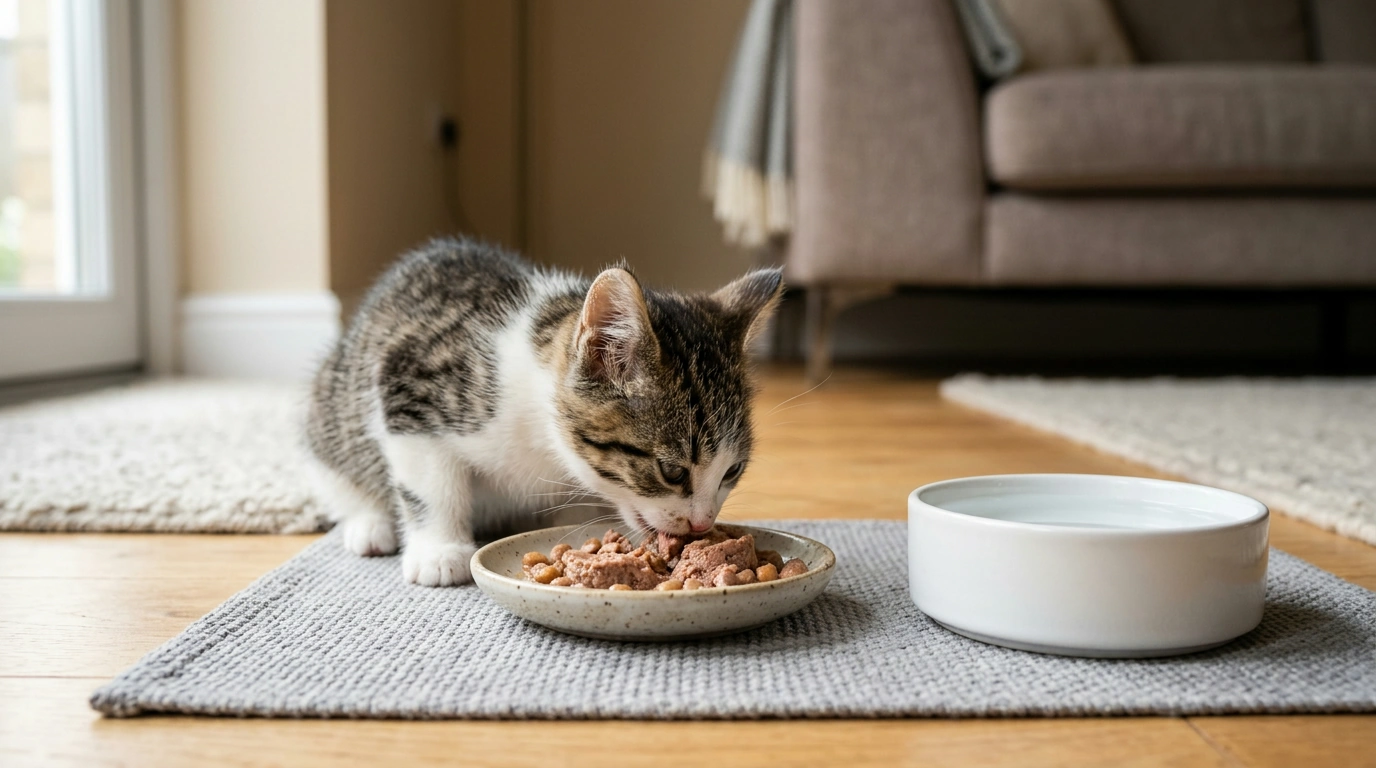
Bringing a kitten home is exciting, and a calm approach to feeding can help you both settle in. Start with food suited to your kitten’s growth, a dependable place to eat, and a veterinarian you can turn to with questions. Our Feeding Your New Kitten Right eBook is a helpful companion as you navigate those early decisions and establish happy mealtimes.
Start With Food Made for Kittens
Kittens are growing rapidly, so their nutritional needs differ from those of adult cats. Look for a complete and balanced food labeled for growth or for all life stages. The nutritional adequacy statement on the package can help you identify whether a food is intended to support a growing kitten. The FDA’s guide to pet food labels explains where to find this information.
Before bringing your kitten home, ask the shelter, breeder, or previous caregiver what food they have been eating. Knowing the brand and formula gives you a starting point, even if you plan to choose a different food later. Discuss any transition with your veterinarian, particularly if your kitten has a health concern or is very young.
Place food in a quiet, accessible spot where your kitten can eat without being crowded by other pets or household activity. Keep fresh water available, and wash food and water dishes regularly. A predictable setting can make mealtime feel less overwhelming in a new home.
Build a Comfortable Mealtime Routine
Kittens generally benefit from small, regular meals. Start with the feeding guidance on the food label, then ask your veterinarian how to adapt it to your kitten. Needs change with age, body condition, health, and the calorie content of the food, so a portion that suits one kitten may not suit another.
Pay attention to how much your kitten eats and how they grow, rather than relying on an arbitrary portion or fixed schedule. Your veterinary team can help you assess body condition and adjust your approach as your kitten develops. Regular visits also give you a chance to discuss treats and how they fit into the overall diet.
A Simple Kitten Feeding Routine
| Routine step | What to do |
|---|---|
| Choose food | Look for a complete and balanced kitten food. |
| Plan meals | Use the label and your veterinarian’s advice to guide portions and timing. |
| Offer water | Keep fresh water available. |
| Monitor | Watch appetite and growth; ask your veterinarian about concerns. |
If you have more than one pet, separate feeding areas may make it easier to see what your kitten actually eats. They can also help prevent an older pet from finishing the kitten’s meal. Pick up uneaten food according to the manufacturer’s storage and serving instructions, especially when offering wet food.
Make Food Changes Gently
A sudden switch can be hard on a kitten’s digestive system. Unless your veterinarian advises otherwise, introduce a new food gradually by mixing a little of it with the familiar food and increasing the new food over time. Ask your veterinarian how to pace the change for your kitten, and watch for changes in appetite or stool along the way.
Seek prompt veterinary advice if your kitten has persistent vomiting, diarrhea, or refuses to eat. Young kittens can become unwell quickly, so don’t wait for a routine appointment when you’re concerned. Tell the veterinary team what your kitten has been eating and when the symptoms began.
Cow’s milk and human food are not substitutes for complete and balanced kitten nutrition. Cow’s milk can upset a kitten’s stomach, and some human foods can be harmful to cats. If your kitten is unweaned or too young to eat independently, ask a veterinarian for specific feeding guidance rather than improvising with milk from the refrigerator.
Keep Kitten Nutrition Guidance Close at Hand
Our Feeding Your New Kitten Right eBook focuses on starting a kitten on food for healthy growth and happy mealtimes. Explore it as a companion to your veterinarian’s individualized advice, whether you’re choosing a first food or settling into a routine. Visit the product page for current purchase details.
Welcoming a puppy as well? Our New Puppy Training Starter Guide offers a separate starting point for puppy routines and training.
For more general feline feeding information, the Cornell Feline Health Center’s feeding guide is another useful resource. Keep notes about your kitten’s food, appetite, and growth to make conversations with your veterinarian more productive.
Before choosing, compare the product details with your daily routine, available space, care needs, and preferred setup. The strongest option is usually the one that fits the intended use clearly and remains simple to clean, store, and check before repeat use.
FAQ
What food should I start my new kitten on?
Choose a complete and balanced food labeled for growth or all life stages. Ask what your kitten previously ate and consult your veterinarian about transitioning to a different food.
How often should a kitten eat?
Kittens generally benefit from small, regular meals, but timing and portions depend on their age, food, and individual needs. Use the food label as a starting point and ask your veterinarian for guidance.
Can kittens drink cow’s milk?
Cow’s milk can upset a kitten’s stomach and is not a replacement for balanced kitten food. Provide fresh water and ask your veterinarian about feeding very young or unweaned kittens.







Leave a comment